Commercial vs Residential HVAC & Refrigeration Systems
Commercial and residential HVAC systems are not the same. Learn the key differences, maintenance needs, and why choosing the right service provider matters. Call 347-750-5288.
While the basic principles of cooling, heating, and refrigeration are similar, commercial and residential systems are fundamentally different in design, scale, performance requirements, and service complexity. Understanding these differences is essential when it comes to maintenance, repairs, system installation, and choosing the right HVAC and refrigeration service provider.
Commercial vs Residential Systems
Commercial Systems
Commercial refrigeration and HVAC systems are engineered for continuous operation and heavy demand. Restaurants, grocery stores, office buildings, warehouses, and medical facilities depend on equipment that can operate for long hours without interruption.
Residential Systems
Residential HVAC systems are designed primarily for comfort and energy efficiency. They serve a smaller space, operate on more predictable schedules, and are built with different capacity requirements.
Commercial systems must maintain precise temperatures and handle large loads. Failure can halt operations, spoil inventory, and cause financial losses.
Residential systems are less complex but still require professional maintenance to ensure safety, comfort, and longevity.
Key Differences
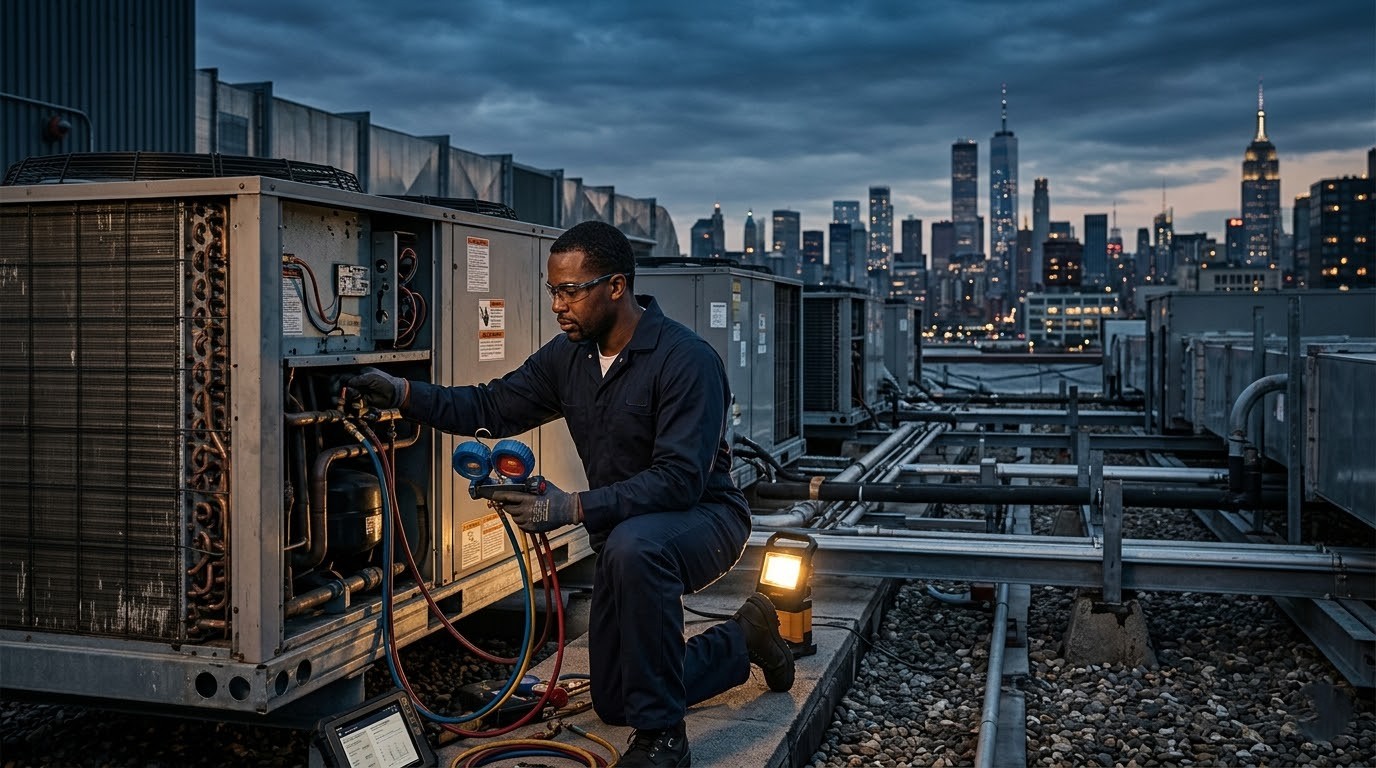
Commercial units are larger, more powerful, and often modular. Rooftop units, split systems, walk-in coolers, commercial freezers, and multi-zone systems require advanced controls.
Residential systems typically include central air conditioning, furnaces, heat pumps, or ductless mini-splits designed for home use.
Commercial refrigeration must maintain strict temperature ranges. Even slight fluctuations can cause spoilage or compliance issues.
Residential systems offer more flexibility but still rely on consistent performance for comfort.
System Complexity
Commercial HVAC systems often use complex ductwork layouts, zoning, automation, and building management integration.
Residential systems are simpler but still require proper airflow, thermostat calibration, and efficiency optimization.
Maintenance Requirements
Commercial maintenance is more frequent and includes coil cleaning, refrigerant checks, electrical testing, and diagnostics.
Residential maintenance includes seasonal tune-ups, filter changes, and safety inspections.
Repair & Service Expertise
Commercial systems require advanced diagnostics and coordination to minimize downtime.
Residential repairs focus on restoring comfort and efficiency but still require expertise.
Energy & Safety Considerations
Commercial systems consume more energy and require strict safety and compliance standards.
Residential systems impact utility bills and must meet safety requirements like proper ventilation and refrigerant handling.
Whether you manage a commercial property or own a home, selecting experienced refrigeration and HVAC professionals ensures accurate diagnosis, safe repairs, efficient operation, and long-term reliability.
Call Express Refrigeration Inc. Today
Whether you own a home or operate a business, trust professionals who understand your system requirements.
Call 347-750-5288