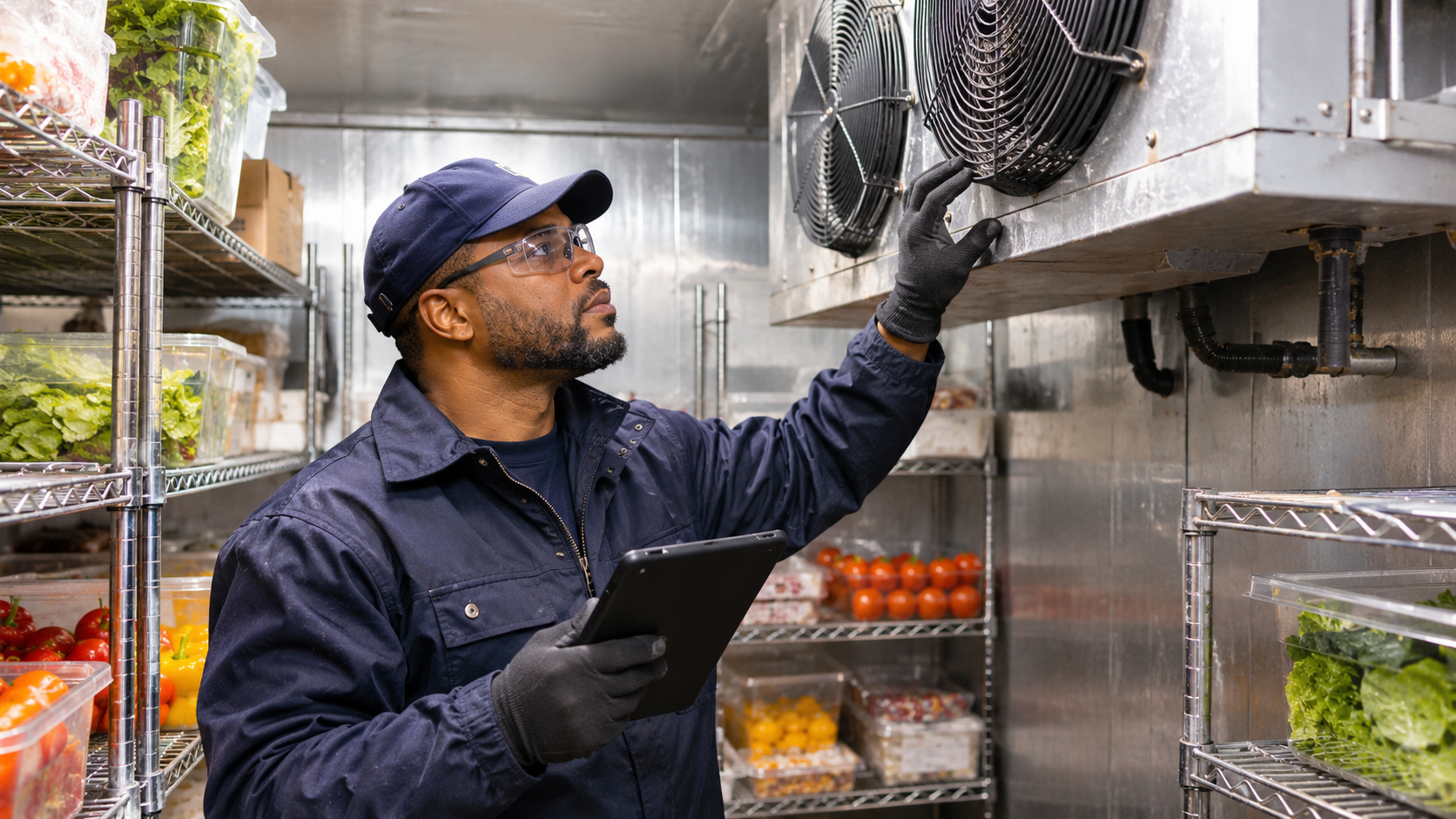
For restaurants, supermarkets, grocery stores, hotels, and food service businesses, commercial refrigeration equipment is essential to daily operations. Walk-in coolers and freezers protect valuable inventory, maintain food quality, and help businesses comply with food safety regulations. When refrigeration equipment begins to malfunction, even a minor problem can quickly become an expensive emergency.
1. Inconsistent Temperatures
One of the earliest signs of refrigeration trouble is difficulty maintaining consistent temperatures. Commercial walk-in coolers should generally maintain food temperatures at 40°F or below, while freezers typically operate around 0°F, depending on the products stored.
Fluctuations could involve a faulty thermostat, refrigerant leak, damaged door gasket, or malfunctioning compressor. Regular temperature monitoring helps identify problems before food safety is compromised.
2. Excessive Frost or Ice Buildup
While some frost may develop during normal operation, excessive ice accumulation is often a warning sign. Common contributing factors include:
Excessive frost can reduce cooling efficiency, restrict airflow, and place unnecessary strain on refrigeration components.
3. Unusual Noises and Vibrations
Commercial refrigeration equipment produces normal operating sounds, but loud buzzing, grinding, rattling, or repeated clicking should never be ignored. These noises may indicate worn fan motors, loose components, electrical problems, or compressor issues. Scheduling an inspection early can prevent additional equipment damage.
4. Water Leaks Around the Equipment
Water pooling around a walk-in cooler or freezer may indicate a clogged drain line, damaged door gasket, condensation problem, or malfunctioning defrost system. Standing water can create slip hazards and damage surrounding flooring. Addressing leaks promptly protects both equipment and workplace safety.
5. Rising Energy Bills
A sudden increase in electricity costs may indicate that refrigeration equipment is working harder than necessary. Dirty condenser coils, damaged insulation, poor door seals, and mechanical problems can force compressors to run longer to maintain safe temperatures. Routine preventative maintenance helps improve equipment efficiency and control operating expenses.
6. Equipment Running Continuously
Commercial refrigeration systems cycle according to cooling demand. If a compressor runs constantly without maintaining the desired temperature, the system may be experiencing mechanical or airflow problems. Continuous operation increases energy consumption and can accelerate equipment wear.
Preventative Maintenance Protects Your Business
Routine commercial refrigeration maintenance helps identify developing problems before they interrupt business operations. Professional service may include:
For food service businesses, preventative maintenance is especially important during the busy holiday season, when inventory levels and refrigeration demands may increase.
Trust Express Refrigeration for Commercial Refrigeration Service
At Express Refrigeration, we understand how important reliable walk-in coolers and freezers are to your business. Our commercial refrigeration services help restaurants, supermarkets, food service establishments, and other businesses maintain dependable cooling equipment.
Don’t Wait for a Complete Refrigeration Breakdown
Contact Express Refrigeration today to schedule an inspection, maintenance, or repair service and help protect your inventory and business operations.
Call 347-750-5288